

The DuoSync Mesh, powering devices like the Reso Pilot Pro, redefines helmet intercom technology for Bluetooth motorcycle helmets by blending Hard Mesh (local radio) and Soft Mesh (internet-based) communication. Unlike app-based intercoms like Zello, it ensures connectivity even without network coverage, offering 150ms latency, 30-rider support, and rider-specific features. With the Bluetooth motorcycle helmet market projected to reach $1.2B by 2030, DuoSync Mesh stands out for safety and flexibility. MotoMelody’s 2025 guide compares it to app-based systems like those in VIMOTO V10 series and Sena 60S wave intercom, highlighting why it’s ideal for riders. Ready to ride connected? Let’s dive in!
- What Is DuoSync Mesh?
- How DuoSync Mesh Works
- DuoSync Mesh vs. App-Based Intercoms
- Key Advantages of DuoSync Mesh
- Why DuoSync Mesh Is Essential for Riders
- DuoSync Mesh vs. Competitors
- Cardo Packtalk series
- Choosing DuoSync Mesh for Your Helmet
- MotoMelody’s Take on DuoSync Mesh
- Conclusion: Why DuoSync Mesh Wins for Riders
What Is DuoSync Mesh?
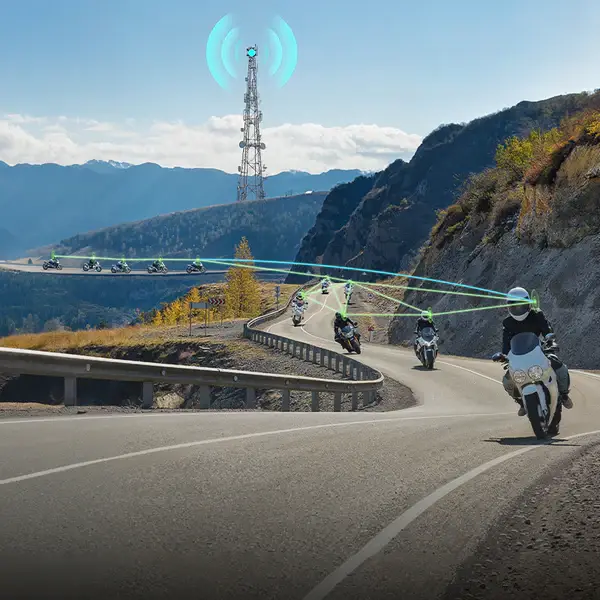
Developed by Reso, is a dual-band hybrid mesh technology for Bluetooth motorcycle helmets. It combines:
- Hard Mesh: 2.4GHz radio for local, no-network communication up to 12km.
- Soft Mesh: 5G/Wi-Fi for unlimited-range global chats.
- Auto-Switching: Seamlessly toggles modes for uninterrupted comms.
Unlike app-based intercoms (Zello, Voxer) that rely solely on internet, DuoSync Mesh ensures reliability in diverse terrains, making it a game-changer for helmet intercoms. Let’s explore its edge.
How DuoSync Mesh Works
It powers Reso Pilot Pro with versatile communication modes tailored for riders:
Hard Mesh Mode
Tech: 2.4GHz narrowband radio for direct device-to-device communication.
Specs:
Range: 2.5km unit-to-unit, 12km group, extendable to 20km via relays.
Riders: Up to 30.
Latency: 150ms, near real-time.
Pros: No internet needed, ideal for remote areas.
Use Case: Group rides in mountains or rural zones.
Soft Mesh Mode
Tech: VoIP via 5G/Wi-Fi through Reso Link App.
Specs:
Range: Unlimited with network.
Riders: up to 30.
Latency: 20-100ms (5G), 100-300ms (4G).
Pros: Global connectivity for dispersed teams.
Use Case: Cross-country rallies with strong signal.
Auto-Switching Mechanism
Function: Automatically switches between Hard Mesh (low-latency, local) and Soft Mesh (unlimited range) based on signal strength.
Advantage: Seamless, no manual adjustments needed.
Performance: Transition in <100ms, ensuring no interruptions.
Rider-Specific Features
AI Noise Cancellation: Filters wind/engine noise at 140km/h.
Camera Integration: Syncs with GoPro 12, Insta360, DJI Osmo Action for audio-video recording.
SOS Alerts: GNSS/gyroscope triggers emergency notifications.
Battery: 1950mAh, 18h music, 13h intercom+music, 5min charge for 2h use.

DuoSync Mesh vs. App-Based Intercoms
App-based intercoms, like those used in VIMOTO V10 series or Sena 60S, rely on internet connectivity. Here’s how DuoSync Mesh compares:
Connectivity and Reliability
DuoSync Mesh:
Hard Mesh: Operates without internet, ensuring 12km group range in remote areas.
Soft Mesh: Matches app-based unlimited range in connected zones.
Reliability: Auto-switching prevents dropouts.
App-Based (e.g., Zello, VIMOTO V10 series):
Connectivity: Requires 4G/5G/Wi-Fi, fails in no-signal areas.
Reliability: Prone to disruptions in weak networks.
Edge: DuoSync Mesh excels in rural rides with Hard Mesh.
Latency
DuoSync Mesh: 150ms (Hard Mesh), 100-300ms (Soft Mesh), near real-time for group coordination.
App-Based: 100-300ms (4G), 20-100ms (5G), up to 500ms+ in weak signals.
Edge: DuoSync’s Hard Mesh ensures lower, consistent latency.
Rider-Specific Features
DuoSync Mesh:
AI noise cancellation for high-speed clarity.
Camera integration for vlogging.
SOS alerts for safety.
App-Based: Generic VoIP apps lack rider-focused features like wind noise reduction or gear integration.
Edge: DuoSync tailors to motorcycle needs.
Group Size and Range
DuoSync Mesh: 30 riders, 20km extended range via relays.
App-Based: Unlimited riders/range (network-dependent), but no offline option.
Edge: DuoSync balances large groups with offline capability.
Comparison Table
| Feature | DuoSync Mesh | App-Based Intercoms |
|---|---|---|
| Offline Comms | Yes (Hard Mesh, 12km) | No |
| Range | 12km/20km (Hard), Unlimited (Soft) | Unlimited (network) |
| Latency | 150ms (Hard), 100-300ms (Soft) | 100-500ms+ |
| Riders | 30 | Unlimited |
| Features | AI noise, camera, SOS | Generic VoIP |
| Use Case | Remote/urban rides | Urban/global only |
Key Advantages of DuoSync Mesh
DuoSync Mesh outshines app-based intercoms for Bluetooth motorcycle helmets:
Unmatched Reliability
Hard Mesh ensures communication in no-signal areas, unlike VIMOTO V10’s DODO Intercom or Sena 60S’s Wave Intercom, which fail without internet.
Auto-switching maintains connectivity across terrains.
Superior Flexibility
Combines 12km local range with unlimited global reach, unlike app-only systems that need constant network access.
Supports 30 riders, ideal for mid-to-large teams.
Rider-Centric Design
AI noise cancellation ensures clarity at 140km/h.
Camera integration (e.g., GoPro 12) syncs team audio for vlogs.
SOS alerts enhance safety with crash detection.
Long Battery Life
1950mAh delivers 18h music, 13h intercom+music.
5min charge yields 2h use, outpacing Sena 60S’s 1170mAh.
Cost and Accessibility
Reso Pilot Pro ($249) is cheaper than Sena 60S ($369) or Cardo Packtalk ($400).
Drawback: Newer brand, less widespread support vs. established names.
Why DuoSync Mesh Is Essential for Riders
DuoSync Mesh is a must-have for Bluetooth motorcycle helmet users due to:
Safety: Hard Mesh ensures comms in remote areas, critical for emergencies.
Team Coordination: Supports 30 riders over 20km, perfect for group tours.
Versatility: Seamless switching suits urban and rural rides.
Specialized Features: AI noise cancellation, camera integration, and SOS alerts cater to riders, unlike generic apps.
Use Cases:
- Remote Rides: Hard Mesh for off-grid trails.
- Global Tours: Soft Mesh for cross-country teams.
- Vlogging: Camera sync for ride documentation.
User Feedback: Rider James notes, “The GPS chip and camera integration make DuoSync Mesh a game-changer for offline tracking and team vlogs”.
DuoSync Mesh vs. Competitors
VIMOTO V10 series (DODO Intercom)
VIMOTO V10 series: Unlimited range via DODO App, but no offline mode.
DuoSync Edge: Hard Mesh for no-signal areas, lower 150ms latency.
Sena 60S (Wave Intercom)
Sena 60S: Combines Wave (cellular) and Mesh 3.0, but 1-2s switch delay.
DuoSync Edge: <100ms switching, longer 18h battery.
Cardo Packtalk series
Cardo: DMC Mesh (8km, 15 riders), no cellular mode.
DuoSync Edge: 20km range, Soft Mesh for global reach.
Choosing DuoSync Mesh for Your Helmet
Budget: Reso Pilot Pro ($249) offers value vs. Sena ($369) or Cardo ($400).
Terrain: Hard Mesh for rural, Soft Mesh for urban.
Team Size: Ideal for 30 riders or vloggers.
Avoid Pitfalls: Ensure hotspot setup for Soft Mesh; check Reso’s support availability.
MotoMelody’s Take on DuoSync Mesh
At MotoMelody, we’re riders who love gear that works. DuoSync Mesh in Reso Pilot Pro delivers reliable offline comms, seamless switching, and rider-focused features like AI noise cancellation and camera integration. It’s a top pick for Bluetooth motorcycle helmets. Visit MotoMelody.com for reviews and gear to stay connected!
Conclusion: Why DuoSync Mesh Wins for Riders
DuoSync Mesh outclasses app-based intercoms with Hard Mesh for offline reliability, 150ms latency, and 30-rider support. Its AI noise cancellation, 18h battery, and camera integration make it ideal for Bluetooth motorcycle helmets. Compared to VIMOTO V10 or Sena 60S, DuoSync Mesh offers unmatched flexibility for all terrains. Find Reso Pilot Pro at MotoMelody.com and ride connected! What’s your ride style? Share below!