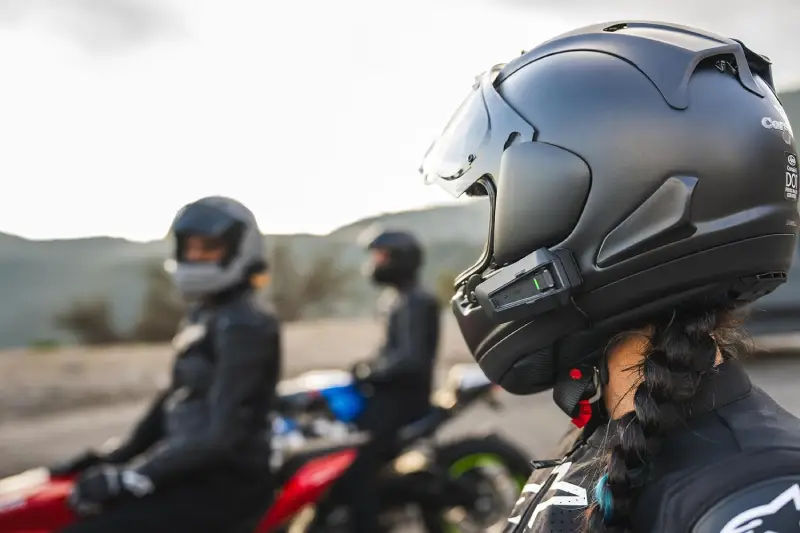

Clear, seamless motorcycle group ride communication is what separates a great group ride from a chaotic—and potentially dangerous—one.
There’s nothing quite like the thrill of hitting the open road with your friends. The synchronized lean into a corner, the shared view from a scenic overlook—these are the moments that define motorcycle culture. But without proper communication, misunderstandings can quickly turn an adventure into a stressful ordeal. A missed turn signal, a lost rider, or an unnoticed road hazard can disrupt the ride’s rhythm and safety.
This guide ensures that never happens. We’ll break down every method of motorcycle group ride communication, from time-tested hand signals to the latest in helmet tech—so you and your crew stay connected, safe, and in sync.
Why is Clear Communication So Crucial for Group Rides?
Before we dive into the “how,” let’s establish the “why.” Effective motorcycle group ride communication is the backbone of any successful ride, built on three pillars:
- Safety: Instantly warn others of potholes, gravel, or debris. Signal for emergency stops and keep track of every rider. This is non-negotiable.
- Coordination: Effortlessly manage route changes, fuel stops, and regrouping points. A well-coordinated group rides like a single, fluid unit.
- Pure Fun: Share a laugh, comment on the beautiful scenery, or just check in. Technology turns a silent ride into a shared social experience.
The Traditional Method: Motorcycle Hand Signals
Every rider should know the basic hand signals. They are the universal, no-fail backup when technology fails or isn’t available.
Here are some of the most common signals to commit to memory in motorcycle group ride communication.
| Signal | Meaning |
| Left arm extended straight out | Turning Left |
| Left arm bent at a 90-degree angle, fist up | Turning Right |
| Left arm extended down, palm facing back | Stop / Slowing Down |
| Pointing with index finger | Road Hazard (point to it) |
| Tapping the top of your helmet | Police Ahead |
| Patting your stomach | Fuel / Rest Stop |
Pro-Tip: For a more comprehensive list, always check resources from the Motorcycle Safety Foundation.

Pros:
- Completely free and universal.
- No batteries or pairing required.
Cons:
- Limited vocabulary (can’t have a conversation).
- Requires line of sight.
- Can be misinterpreted, especially at night or in bad weather.
Upgrading Your Group Ride Communication: Helmet Intercoms
For those who want more than just basic signals, motorcycle helmet intercoms have revolutionized the group riding experience. These devices allow for crystal-clear, real-time conversations right inside your helmet. They primarily use two types of technology: Bluetooth and Mesh.
Type 1: Bluetooth Intercoms
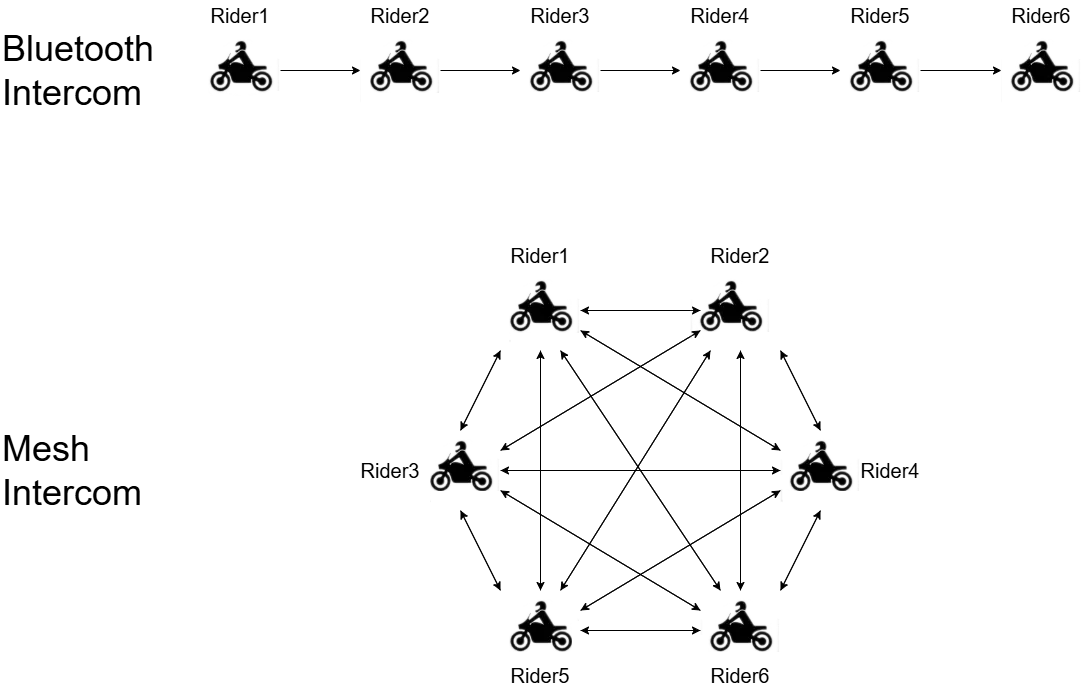
Bluetooth technology connects riders in a sequential “daisy-chain.” Rider A connects to Rider B, who connects to Rider C, and so on. This technology is incredibly popular and effective for smaller motorcycle group ride communication.
Best for: Small groups (2-4 riders), budget-conscious riders, and city commuting.
Pros:
- Cost-Effective: Generally more affordable than Mesh systems.
- Excellent Audio Quality: Perfect for music, calls, and GPS navigation.
- Low Power Consumption: Often offers very long battery life.
Cons:
- Chain Dependency: If a rider in the middle of the chain disconnects, it can split the group’s communication link.
- Limited Range: The range is typically between each rider, not the total length of the group.
For riders looking for a reliable and affordable entry into group communication, a high-quality Bluetooth headset is the perfect starting point. Models like our own MotoMelody A30 are designed to provide all the essential features without breaking the bank.
Type 2: Mesh Intercoms
Mesh is the new gold standard for large group communication. Instead of a linear chain, Mesh creates a dynamic and adaptive network. Every rider is connected to every other rider simultaneously. If someone rides out of range, the network automatically heals itself, keeping the rest of the group connected without interruption.
Best for: Large groups (4+ riders), touring clubs, and riders who demand the most stable connection.
Pros:
- Rock-Solid Stability: The network is self-healing and incredibly robust.
- Massive Range: The total range of the group can extend for miles.
- Seamless Connection: Riders can join or leave the group without disrupting communication for everyone else.
Cons:
- Higher Cost: Mesh technology is more advanced and comes at a premium price.
- Can be Overkill: For a duo or small group, the extra cost may not be justified.
Bluetooth vs. Mesh: Which is Right for Your Ride?
Still not sure? Here’s a simple breakdown to help you (or your customers) decide.
| Factor | Choose Bluetooth If… | Choose Mesh If… |
| Group Size | You typically ride with 2-4 people. | You ride with large groups (5+) or clubs. |
| Budget | You want the best value and essential features. | You are willing to invest in the most reliable tech. |
| Riding Style | You do a mix of solo, duo, and small group rides. | Your group often spreads out over long distances. |
Conclusion: Finding Your Perfect Motorcycle Group Ride Communication Flow
The best way to communicate on a group ride isn’t about choosing one method—it’s about building a smart system.
- Everyone learns hand signals as a universal, unbreakable backup.
- For most riders in small to medium-sized groups, a reliable Bluetooth system offers the perfect blend of performance, features, and value.
- For large, dedicated touring groups, investing in a Mesh system will pay dividends in stability and ease of use.
Ultimately, the goal is to keep every ride safe, coordinated, and enjoyable. By understanding your options, you can equip yourself and your group with the tools you need to create unforgettable memories on the road.
Ready to stop shouting over the wind and start talking?
Explore our curated selection of entry-level Bluetooth and flagship Mesh intercoms at MotoMelody. We have the perfect fit for every rider and every budget.