
Motorcycle communication systems have revolutionized the riding experience, enabling seamless motorcycle communication between riders, passengers, and groups. Whether you’re sharing navigation updates, enjoying music, or coordinating with your riding crew, these systems—often integrated into helmets—are essential for modern motorcyclists. A critical factor in choosing the right system is its motorcycle headset range, as the bluetooth motorcycle communication distance determines how effectively you stay connected across various terrains and conditions. This blog dives into detailed range testing, exploring how far popular systems like Cardo and Sena can reach and how environmental factors impact performance.
- Why Motorcycle Headset Range Matters
- Types of Motorcycle Communication Systems
- Range Testing: How Far Can Systems Reach?
- Environmental Factors Impacting Motorcycle Headset Range
- Real-World Testing Insights
- Choosing the Right Motorcycle Communication System
- Tips to Maximize Motorcycle Headset Range
- Conclusion: Find Your Perfect Motorcycle Communication System
Why Motorcycle Headset Range Matters
The range of a motorcycle communication system dictates how far riders can stay connected without losing signal. Whether you’re riding solo with a passenger or in a large group across rugged terrain, understanding the bluetooth motorcycle communication distance is key to selecting the right system. Factors like terrain, weather, and group size can significantly affect performance, making real-world testing insights crucial for informed decisions.
Types of Motorcycle Communication Systems
Before diving into range testing, let’s explore the main types of motorcycle communication systems and their typical motorcycle headset range capabilities:
Bluetooth Systems
Bluetooth-based systems, like the VIMOTO V10x popular for small groups (4-8 riders). They rely on direct connections, with ranges typically 1.6~2.5 km, depending on the conditions.
Mesh Systems
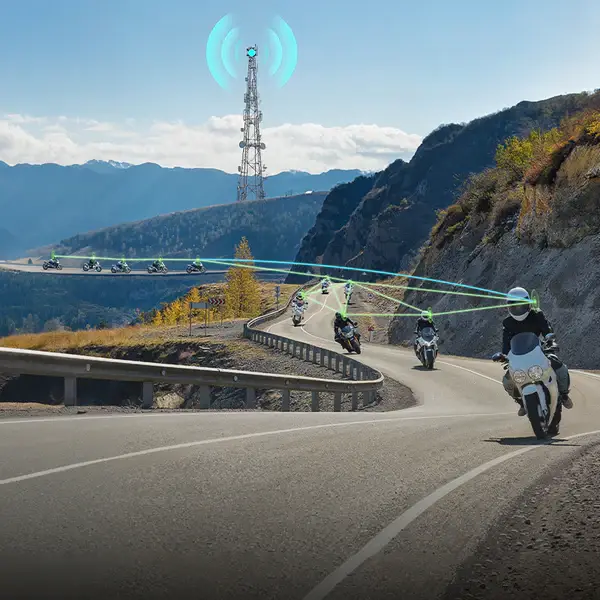
Mesh systems, such as the Cardo PackTalk Pro, use dynamic networking to extend range through multi-hop communication. These are ideal for larger groups (up to 15 riders) and challenging environments, offering ranges up to 8 km in optimal conditions.

Wired Systems
Wired systems are budget-friendly but limited to short-range rider-passenger communication, typically a few meters, and lack the versatility of wireless options.
2-Way Radio Systems
Using UHF/VHF frequencies, these systems offer wider ranges in open areas but may lack integration with music or GPS, making them less common for recreational riders.
Range Testing: How Far Can Systems Reach?
To understand the bluetooth motorcycle communication distance, we’ve compiled data from manufacturer specifications and real-world tests. Below is a detailed breakdown of popular systems’ ranges:
| System Model | Technology | Rider-to-Rider Range | Group Range | Max Group Size |
|---|---|---|---|---|
| Cardo PackTalk Pro | Mesh | 1.6 km (1 mile) | Up to 8 km (5 miles) | 15 riders |
| Sena 60S | Mesh | 1.9 km (1.2 miles) | Not specified | 24 riders |
| Reso Pilot Pro | Mesh | 2.5 km (1.5 miles) | Up to 12 km(7.5 miles) | 30 riders |
| VIMOTO V10x | Bluetooth | 1.6~2.5km(1-1.5 miles) | Not specified | 8 riders |
Key Observations from Range Testing
Cardo PackTalk Pro: Excels in group rides, with a 1.6 km rider-to-rider range and up to 8 km for groups, thanks to its mesh technology.
Reso Pilot Pro: Thanks to its DuoSync Dual-band mesh tech, it can support up to 30 riders with 12km group range. The hotspot range extension feature allows ultimate range for connection.
Sena 60s: Support up to 24 riders for group intercom, perfect for large group. With its WAVE intercom, it can allow unlimited riders and unlimited range via cellular network.
These ranges are based on ideal conditions, but real-world performance often varies due to environmental factors.
Environmental Factors Impacting Motorcycle Headset Range
The motorcycle headset range is heavily influenced by external conditions. Below, we explore how terrain, weather, group size, and other factors affect bluetooth motorcycle communication distance.
Terrain
Urban Areas: Buildings and structures can block signals, reducing range. For example, tests of the VIMOTO V10x in cities showed ranges dropping to line-of-sight distances.
Mountainous Regions: Canyons and hills limit range significantly. A Motorcycle.com review noted the VIMOTO V10x struggled in canyons, maintaining connection only within a few bends.
Open Highways: Flat, open terrains yield the best ranges, with systems like the Cardo Freecom 4X reaching up to 3.6 km in tests.
Mesh Advantage: Mesh systems like the Cardo PackTalk Pro/Reso Pilot Pro perform better in rugged terrains by relaying signals through other riders, extending the effective range.
Weather
Rain and Humidity: Wet conditions can interfere with signal transmission. Systems with IP67 waterproof ratings, like the Reso Pilot Pro, maintain reliability in rain.
Wind Noise: High speeds and wind can degrade audio clarity, indirectly affecting perceived range. Noise-cancellation features, as seen in the Cardo Freecom 4X, help mitigate this.
Group Size
Bluetooth Limitations: Larger groups (e.g., 8 riders on VIMOTO V10x) may experience reduced range due to signal strain, as per Motorcycle.com testing.
Mesh Resilience: Mesh systems handle larger groups better, with the Reso Pilot Pro supporting up to 30 riders without significant range loss.
Antenna Position and Other Factors
Antenna Placement: Tests show that lowering the antenna (e.g., on Sena 20S) reduces range, emphasizing the importance of proper setup.
Interference: Electronic devices or other Bluetooth signals can cause disruptions, particularly in urban settings.
Reso equips its headset with two Bluetooth antennas and two mesh antennas, along with the industry’s only standard EMI shielding in a Bluetooth headset which ensure superior stablilty and extend range p to 2.5km point-to-point and 12km for up to 30 riders-group networking.

Real-World Testing Insights
Real-world tests provide a clearer picture of how motorcycle communication systems perform under varying conditions. Here’s what the data shows:
Bluetooth Systems
VIMOTO V10x: A review highlighted its 2,5 km range in open areas, but performance dropped in canyons to line-of-sight distances. Audio remained usable even at range limits, making it reliable for small groups.
Cardo Freecom 4X: A MotorCycleNews review from May 2025 praised its 3.6 km range and excellent sound quality, tested over full-day rides in mixed terrains.
Mesh Systems
Cardo PackTalk Pro: According to Cardo Systems, its mesh technology supports up to 8 km for groups, with real-world tests confirming strong performance in challenging environments like mountains.
Reso Pilot Pro: A blog noted its 12000-meter range for up to 30 riders, with mesh technology ensuring stable connections in urban and rural settings.
Key Takeaways
Mesh vs. Bluetooth: Mesh systems outperform Bluetooth in group settings and rugged terrains due to dynamic signal relaying.
Waterproofing: Systems with high IP ratings (e.g., IP67) maintain performance in adverse weather, crucial for long rides.
Audio Clarity: Noise cancellation and wind-resistant designs enhance communication quality, even at range limits.
Choosing the Right Motorcycle Communication System
Selecting a system depends on your riding style, group size, and typical environment. Here’s a guide to help you decide:
For Solo or Small Group Rides
Recommended Models: VIMOTO V10x, Cardo Freecom 4X
Why: These Bluetooth systems offer ranges of 1.6-3.6 km, sufficient for small groups or rider-passenger communication. They’re cost-effective and integrate well with GPS and music.
Best For: Urban or highway rides with minimal signal obstructions.
For Large Group Rides or Challenging Terrains
Recommended Models: Cardo Packtalk Pro, Reso Pilot Pro
Why: Mesh systems provide extended ranges (up to 8-12 km for groups) and handle larger groups (10-30 riders) with better reliability in mountains or urban areas.
Best For: Group adventures in varied terrains or unpredictable weather.
Budget-Friendly Options
Recommended Models: VIMOTO XR($99), MotoMelody A30($29)
Why: These offer 500-1000 meter ranges at a lower price point, ideal for casual riders or smaller budgets.
Best For: Short rides or beginner riders.
Pro Tip: Always check for IP67 waterproofing and helmet compatibility to ensure durability and ease of use.
Tips to Maximize Motorcycle Headset Range
To get the most out of your motorcycle communication system, follow these tips:
- Optimize Antenna Position: Keep antennas upright and unobstructed, as lowering them can reduce range.
- Test in Real Conditions: Before a long ride, test your system in similar terrains to understand its limits.
- Choose Mesh for Groups: For rides with more than 4 riders, opt for mesh systems to maintain range and connectivity.
- Maintain Line of Sight: In challenging terrains, try to keep riders within visual range to boost signal strength.
- Update Firmware: Regularly update your system’s firmware to improve performance and range, as recommended by manufacturers like Sena and Cardo.
Conclusion: Find Your Perfect Motorcycle Communication System
Choosing the right motorcycle communication system comes down to understanding your motorcycle headset range needs and the environments you ride in. For solo or small group rides, Bluetooth systems like the VIMOTO V10x or Cardo Freecom 4X offer reliable ranges of 1.6-3.6 km. For larger groups or challenging terrains, mesh systems like the Reso Pilot Pro, with up to 12 km group range, are the way to go. Environmental factors like terrain, weather, and group size play a significant role, so prioritize systems with robust features like IP67 waterproofing and noise cancellation.Explore top motorcycle communication systems at MotoMelody to find the perfect fit for your riding adventures. Ready to stay connected on the road? Check out our curated selection today!