

The rise of helmet intercoms has transformed motorcycle riding, enabling seamless communication, music streaming, and GPS navigation. With 68% of riders prioritizing connectivity for safety and convenience, the control system of a Bluetooth motorcycle helmet intercom is critical. Riders need intuitive, glove-friendly controls to stay focused on the road. This guide explores the main types of helmet intercom controls—buttons, wheels, jog dials, handlebar remotes, and voice assistants—while reviewing top models like VIMOTO V10s/V10x, Reso Pilot Pro/Neo, Cardo Packtalk series, Sena 60S, and ASMAX F1. We’ll help you choose the best control system for safe and enjoyable rides in 2025.
Why Helmet Intercom Controls Matter for Safe Riding
The control system of a helmet intercom directly impacts rider safety and convenience. Operating a Bluetooth motorcycle helmet system while wearing gloves or riding at high speeds requires intuitive, reliable controls. Poorly designed buttons or complex operations can distract riders, increasing accident risks. A 2024 study by Motorcycle News highlights that glove-friendly designs, such as large buttons or voice assistants, reduce manual interaction by up to 40%, enhancing safety.
Here’s why helmet intercom controls are crucial:
Safety: Minimize distractions with quick, intuitive operations.
Glove Compatibility: Larger buttons or wheels ensure ease of use.
Versatility: Support for music, calls, group chats, and GPS.
Durability: Weather-resistant controls for all riding conditions.
Below, we analyze the control systems of five leading helmet intercom models, focusing on their design, usability, and safety features.

Types of Helmet Intercom Control Systems
1.Traditional Buttons
Traditional buttons are the foundation of most helmet intercoms, offering direct access to functions like calls, music, and intercom pairing. However, small or cluttered buttons can be hard to use with gloves.
Pros: Simple, reliable, and cost-effective.
Cons: Small buttons may be tricky to press at speed.
2.Wheel Control
Wheel control, popularized by Cardo, uses a rolling mechanism for volume and settings adjustments. It’s ideal for quick tweaks but may require additional buttons for complex tasks.
Pros: Precise volume control, glove-friendly.
Cons: Limited to specific functions; other buttons may be complex.
3.Jog Dial Control
Jog dial control, seen in Sena models, combines rotation and pressing for versatile operation. It’s excellent for volume and track changes but may require practice for advanced functions.
Pros: Multifunctional, intuitive for volume.
Cons: Complex actions can be challenging at high speeds.
4.Handlebar Remote
Handlebar remotes, like those offered by VIMOTO and Sena, allow riders to control the intercom without releasing the handlebars, significantly boosting safety.
Pros: Hands stay on handlebars, enhancing safety.
Cons: Adds installation complexity and cost.
5.Voice Assistants
Voice assistants (e.g., “Hi Max” for ASMAX or Siri/Google integration) enable hands-free operation, minimizing distractions. They’re increasingly standard across brands.
Pros: Safest option, no manual interaction needed.
Cons: May struggle in noisy environments or with accents.
Top 5 Helmet Intercoms: Control Systems Compared
VIMOTO V10 Series: Big Buttons for Glove-Friendly Control
The VIMOTO V10 series is designed for riders who prioritize glove-friendly operation. Its large buttons and optional handlebar remote make it a top choice for safety-conscious riders.
Control Features
Large Buttons: Big, pressure-sensitive buttons for easy glove operation.
Handlebar Remote: Wireless control keeps hands on the handlebars.
Voice Assistant: Supports voice control for hands-free commands.
Bluetooth 5.2/5.3: Stable pairing for music, calls, and GPS.

Advantages
Glove-Friendly: Large buttons reduce fumbles during rides.
High Safety: Handlebar remote minimizes distractions.
Versatile Controls: Supports complex functions like SCC3.0 intercom.
Learning Curve: Multiple buttons may require adaptation.
Safety and Usability
The VIMOTO V10 series excels for riders wearing gloves, but its feature-rich design may take time to master. The handlebar remote and voice assistant make it one of the safest helmet intercoms available.
Reso Pilot Pro/Neo: Sleek Design with Wheel Control

The Reso Pilot Pro/Neo combines stylish design with a wheel-based control system. While its buttons are clear, some users find them small for glove use.
Control Features
Wheel Control: Easy scroll wheel for volume and settings.
Dedicated Buttons: “Phone” and “Mesh” buttons for quick pairing.
Voice Assistant: Supports hands-free commands via “Hey Reso”.
Compact Design: Sleek integration with helmets.
Advantages
Intuitive Wheel: Smooth volume adjustments.
Clear Layout: Dedicated buttons simplify key functions.
Voice Support: Reduces manual operation for safety.
Small Buttons: May be tricky with thick gloves.
Safety and Usability
The Reso Pilot Pro offers a balance of style and functionality. Its wheel control is glove-friendly, but smaller buttons may challenge some users. Voice assistants enhance safety for complex tasks.
Cardo Packtalk Series: Wheel Control for Precision

The Cardo Packtalk series is renowned for its wheel control, ideal for quick volume adjustments. However, some button operations can be complex with gloves.
Control Features
Wheel Control: Precise volume and settings adjustments.
Button Layout: Multiple buttons for Mesh, calls, and music.
Voice Assistant: “Hey Cardo” for hands-free operation.
Dynamic Mesh: Auto-reconnects up to 15 riders.
Advantages
Superior Volume Control: Wheel design is intuitive and fast.
Robust Features: Supports group communication and music.
Voice Commands: Enhances safety for complex tasks.
Button Complexity: Some actions require memorization.
Safety and Usability
The Cardo Packtalk shines for volume control and group rides but may feel cumbersome for glove users due to button complexity. Voice commands mitigate distractions, boosting safety.
Sena 60S: Jog Dial for Versatile Control

The Sena 60S features a jog dial control system, combining rotation and pressing for versatile operation. Its glove-friendly design makes it a favorite for dynamic riders.
Control Features
Jog Dial: Rotates for volume, presses for track changes.
Large Buttons: Easy to press with gloves.
Handlebar Remote: Optional remote for hands-on-handlebar control.
Voice Assistant: Supports voice control for hands-free use via “Hey Sena”

Advantages
Glove-Friendly: Jog dial and buttons are easy to operate.
Versatile Controls: Handles volume, tracks, and intercom seamlessly.
High Safety: Remote and voice options reduce distractions.
Learning Curve: Complex actions may require practice.
Safety and Usability
The Sena 60S is a top pick for riders needing versatile, glove-friendly controls. Its jog dial and remote option ensure safe, efficient operation during rides.
ASMAX F1: Simplified Button Design
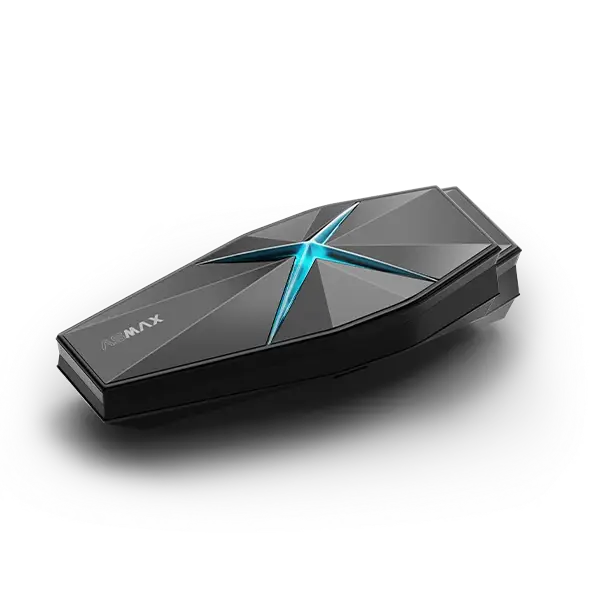
The ASMAX F1 prioritizes simplicity with integrated buttons and a powerful voice assistant, making it ideal for riders seeking minimalistic controls.
Control Features
Integrated Buttons: Flush with the unit for streamlined operation.
Voice Assistant: “Hi Max” for hands-free control.
Bluetooth 5.3: Fast, stable connections for music and calls.
Minimalist Design: Fewer buttons for easier use.
Advantages
Simple Operation: Intuitive for beginners and glove users.
Voice-Driven: Reduces manual interaction for safety.
Sleek Design: Enhances helmet aesthetics.
Limited Buttons: Fewer options for complex tasks.
Safety and Usability
The ASMAX F1 is perfect for riders who value simplicity and safety. Its integrated buttons and voice assistant minimize distractions, though it may lack advanced control options.
Helmet Intercom Control Comparison Table
| Brand/Model | Control Type | Glove-Friendly | Safety Features | Volume Control |
|---|---|---|---|---|
| VIMOTO V10 series | Large Buttons, Remote | Excellent | Remote, Voice | Good |
| Reso Pilot | Wheel, Small Buttons | Moderate | Voice | Excellent |
| Cardo Packtalk | Wheel, Complex Buttons | Moderate | Voice | Excellent |
| Sena 50R | Jog Dial, Large Buttons | Excellent | Remote, Voice | Excellent |
| ASMAX F1 | Integrated Buttons | Good | Voice | Moderate |
How to Choose the Right Helmet Intercom Control System
Selecting the best helmet intercom control system depends on your riding style and priorities:
Safety First: Choose models with handlebar remotes (VIMOTO V10 series, Sena 60S) or voice assistants (all models) to minimize distractions.
Glove Compatibility: Opt for large buttons (VIMOTO V10 series, Sena 60S) or wheel/jog dial designs (Cardo, Sena, Reso).
Volume Control: Cardo Packtalk, Reso Pilot and Sena 60S excel for quick, precise adjustments.
Simplicity: ASMAX F1 for straightforward operation.
Group Rides: Reso Pilot, Sena 60S or Cardo Packtalk for robust Mesh connectivity.
Consider your helmet type, ride duration, and whether you prioritize solo or group features when choosing a Bluetooth motorcycle helmet system.
Why Chinese Manufacturers Excel in Helmet Intercoms
Chinese brands like VIMOTO, Reso and ASMAX, MotoMelody lead the helmet intercom market due to:
- Affordable Innovation: High-quality controls at competitive prices.
- Advanced Technology: Integration of voice assistants and Bluetooth 5.3.
- Global Supply Chain: Efficient production and distribution.
- R&D Focus: Continuous improvements in control design and safety.
These strengths make Chinese Bluetooth motorcycle helmet systems accessible and reliable for riders worldwide.
Conclusion: Pick the Best Helmet Intercom for Your Ride
Choosing the right helmet intercom control system is key to safe and enjoyable rides in 2025. The VIMOTO V10 series offers glove-friendly buttons and a handlebar remote for maximum safety. The Reso Pilot Pro and Cardo Packtalk excel in wheel-based volume control, while the Sena 60S balances versatility with jog dial ease. For simplicity, the ASMAX F1 shines with integrated buttons and voice commands.
Explore these Bluetooth motorcycle helmet systems at MotoMelody to find the perfect fit for your riding needs. Contact us at sales@motomelody.com for expert advice or to source top-tier helmet intercoms from China.